Tallulah Willis Apologizes Over Bruce Willis Photo
Tallulah Willis Apologizes Over Personal Photo of Bruce Willis
Tallulah Willis reportedly apologized after sharing a personal photograph of her father, actor Bruce Willis. The incident renewed discussion about privacy, consent, and the challenges families face when sharing moments involving a relative with dementia.
Bruce Willis’s family has spoken publicly about his health, including his diagnosis of frontotemporal dementia. However, public interest does not create unlimited access to private images or medical information.
The available information does not establish the original post’s exact date, platform, caption, or whether Bruce Willis consented to its publication. Those details should not be treated as confirmed without a primary statement or reliable reporting.
What Happened With the Photo?
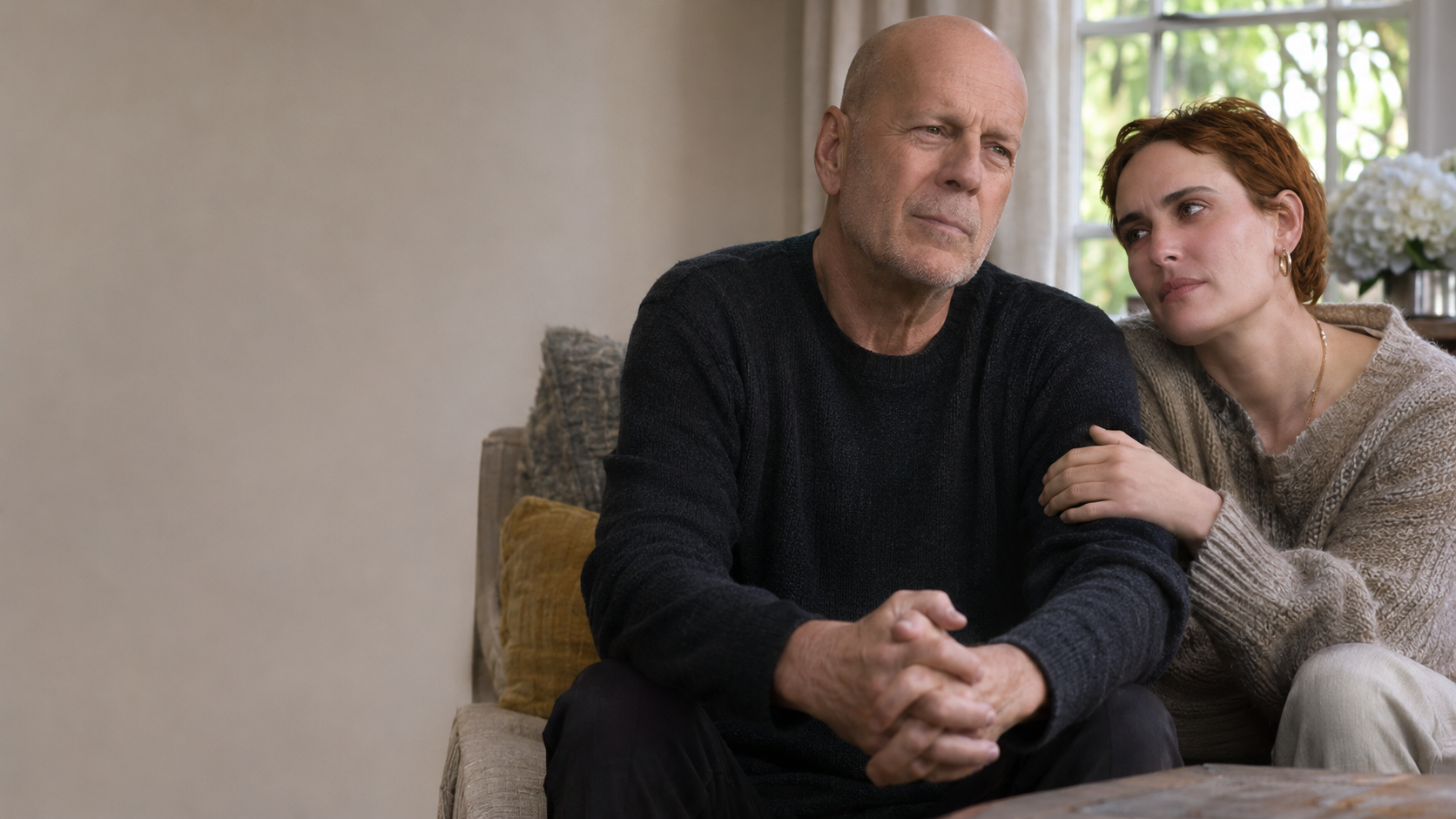
Tallulah Willis reportedly shared a personal photograph of Bruce Willis that some viewers considered intimate. The image attracted attention because it showed a private family moment involving an actor who has largely stepped away from public life following his diagnosis.
No verifiable copy of the original post, its exact wording, or a confirmed record of when and where it appeared is included in the available material. It is also unclear whether the image was deleted, edited, restricted, or reposted by another account.
These gaps matter. Social media discussions often combine original posts with screenshots, reposts, commentary, and speculation. Later descriptions may not accurately reflect what Tallulah originally shared or intended to communicate.
The responsible summary is that Tallulah shared a personal image of her father, the post prompted privacy concerns, and she later apologized. Republishing the image or directing readers to unauthorized copies would extend the circulation of a sensitive family photograph.
Why the Image Was Considered Intimate
The term “intimate” may describe a private setting, an emotional family moment, Bruce Willis’s reduced public visibility, or the fact that the image showed him outside a controlled professional appearance.
It does not automatically establish exploitation or a legal violation. A photograph can be meaningful to relatives while still being unsuitable for broad public distribution.
The context of Bruce Willis’s dementia diagnosis makes the issue more sensitive. Images of people with cognitive disorders can lead viewers to interpret appearance, posture, expression, or behavior as evidence of medical decline. Such interpretations are unreliable and can reduce a person to a diagnosis.
No reliable public information confirms that Bruce Willis objected to the photograph. That claim should not be made without a direct statement from him, his representatives, or a verified source with access to the family.
Tallulah’s Apology
Tallulah Willis reportedly apologized after the image prompted criticism. The available material does not include a verified transcript of her apology or a link to an authenticated post.
It is therefore appropriate to say that the apology addressed concerns about sharing a highly personal image. It is not appropriate to claim that she admitted a specific form of wrongdoing, that Bruce Willis asked her to remove the image, or that the family adopted a new social media policy unless those details are confirmed.
An apology may acknowledge that a family moment reached a wider audience than intended. It does not necessarily establish malicious intent. Families may share photographs to express affection, document ordinary life, or help audiences see a person beyond a diagnosis. The same image can still raise legitimate concerns about dignity and consent.
Bruce Willis’s Dementia Diagnosis
Bruce Willis’s family announced in 2022 that he was stepping away from acting after he received a diagnosis of aphasia. Aphasia can affect a person’s ability to communicate through speech, writing, reading, or language comprehension.
In February 2023, the family announced that his condition had received a more specific diagnosis: frontotemporal dementia, commonly called FTD. The announcement was shared through the Association for Frontotemporal Degeneration and attributed to his family. Source 1
The family said that his condition had progressed and that the diagnosis provided greater clarity. The announcement also encouraged greater public awareness of frontotemporal dementia.
The family’s statements do not provide a complete medical record. They do not establish every symptom, treatment, care arrangement, or aspect of his prognosis. Those details remain private unless the family or his medical representatives chooses to disclose them.
What Is Frontotemporal Dementia?
Frontotemporal dementia is a group of neurodegenerative disorders affecting the frontal and temporal lobes of the brain. These areas are associated with behavior, personality, judgment, language, and other functions.
Depending on the type of FTD, a person may experience changes in:
- Language and communication
- Social behavior
- Personality
- Judgment
- Emotional responses
- Movement
- Planning and executive function
Symptoms vary significantly. Some people experience prominent language difficulties, while others develop changes in behavior or personality. FTD can affect people younger than the age groups most commonly associated with Alzheimer’s disease. Source 2
A photograph cannot establish the presence, severity, or progression of FTD. Viewers should not diagnose Bruce Willis based on images, videos, public appearances, or secondhand descriptions. Only qualified medical professionals with access to a patient’s clinical history can assess an individual’s condition.
The Family’s Public Approach
Bruce Willis’s family has emphasized support, compassion, and awareness. His wife, Emma Heming Willis, has discussed the challenges of dementia caregiving and shared educational information.
The family has also encouraged greater understanding of FTD and support for organizations that assist affected families. These efforts have drawn attention to a condition that can be misunderstood, particularly when behavioral or language changes appear before familiar memory symptoms.
Public statements do not mean that every private moment should be distributed. A family can disclose a diagnosis while retaining control over photographs, medical details, and daily experiences. Awareness and privacy are not mutually exclusive.
Why Privacy Matters in Celebrity Health Coverage
Bruce Willis is a globally recognized actor, and his diagnosis has legitimate public interest because his family announced it and connected it to broader awareness of FTD. That interest does not eliminate his right to dignity or personal boundaries.
There is a difference between a family voluntarily confirming a diagnosis, a relative sharing a personal photograph, a media outlet republishing the image, members of the public circulating copies, and commentators speculating about health based on appearance. Each step can increase the loss of privacy.
Reporting should focus on confirmed facts, public statements, and relevant medical information. It should avoid voyeuristic descriptions, humiliating commentary, and unsupported claims.
Consent and Capacity
Consent requires particular care when a person has a cognitive disorder. The public cannot determine Bruce Willis’s decision-making capacity from a photograph or a diagnosis alone. A dementia diagnosis does not automatically answer every question about a person’s ability to consent.
Relevant questions include:
- What were the person’s wishes?
- Was the image shared privately or publicly?
- Did the person understand its likely audience?
- Does publication serve a legitimate public interest?
- Could the image cause embarrassment, distress, or harm?
- Is the image necessary to explain the story?
These are ethical questions, not automatic legal conclusions. Whether publication was legally permissible depends on the facts and applicable law.
Families and editors should consider whether an image preserves the person’s dignity, whether it could be misunderstood, and whether the same message could be communicated with less intrusive material.
The Risks of Sharing Personal Images
Social media quickly removes photographs from their original context. Images can be downloaded, cropped, altered, reposted, or embedded in unrelated stories. Captions can disappear while photographs continue circulating.
Deleting a post does not guarantee that copies have vanished. Screenshots may remain available, and search engines or archive services may preserve fragments of the discussion.
Readers should avoid downloading or reposting sensitive images, especially when the subject is ill or may not have clearly consented to publication. Reactions, comments, and quote-posts can also increase an image’s reach.
Reputable coverage does not require displaying the photograph. A written explanation can report the apology and privacy concerns without reproducing the material at issue.
Tallulah Willis’s Relationship With Her Father
Tallulah Willis has spoken publicly about her father and shared family-related content over the years. Her public posts have often reflected affection and family connection amid intense attention surrounding Bruce Willis’s health.
That history may help explain why a personal photograph was shared. A relative may view an image as a loving family memory rather than as medical or celebrity content. The public may interpret the same image through the lens of his diagnosis.
Those perspectives are not always equivalent. A family photograph can communicate closeness without being suitable for widespread publication. Tallulah’s reported apology suggests recognition of that boundary, although its exact wording and scope should be confirmed through a primary source.
Families affected by dementia may experience grief before a loved one dies, uncertainty about changing abilities, pressure from outsiders, and difficult disclosure decisions. Public attention can add further strain, with relatives facing criticism for sharing too much or too little.
The appropriate response is not to demand more access. It is to respect the family’s boundaries and rely on verified information.
Public Reaction to the Apology
Public reactions reportedly included sympathy for Tallulah and the wider family. Some viewers may have regarded the post as a personal expression of love and the apology as recognition of the concerns raised.
Critics argued that the photograph was a private family matter and should not have been shared publicly. Their concerns centered on Bruce Willis’s dignity, the absence of confirmed consent, and the risk that an intimate moment could circulate without context.
Others may view the post as an understandable attempt to share a family memory. Both perspectives can be discussed without insulting Tallulah or speculating about Bruce Willis’s wishes.
Social media engagement does not reliably show public consensus. Viral posts often attract disproportionate attention, while emotionally charged health stories encourage unsupported claims about symptoms, prognosis, treatment, or family relationships.
Readers should check who first published the information, whether the account is authentic, when the post appeared, whether the claim came from the family or a qualified professional, and whether later reports accurately quoted the original statement.
How Media Outlets Should Report the Incident
News organizations should use precise, non-sensational language, such as:
- “A private family photograph”
- “An image that prompted privacy concerns”
- “Tallulah Willis apologized for sharing the photograph”
- “The family has publicly confirmed Bruce Willis’s diagnosis”
They should avoid terms such as “scandal,” “exploitation,” or “wrongdoing” unless reliable evidence supports them. A publication should also avoid using the photograph as a headline image if the central concern is that it was too private for broad distribution.
Coverage should verify the original post’s date, the apology’s date and wording, the platform where the image appeared, whether the post remains available, and whether later reports accurately reflect the original content. When those facts cannot be confirmed, the article should state that limitation.
Reporting should use the diagnosis publicly confirmed by Bruce Willis’s family: frontotemporal dementia. It should not interpret photographs as medical evidence or speculate about life expectancy, treatments, daily care, or symptoms without reliable, attributable sources.
What Readers Should Take Away
Tallulah Willis’s reported apology concerns the sharing of a highly personal image involving her father. The episode illustrates the difficulty of balancing family openness with privacy when a public figure has dementia.
Bruce Willis’s family publicly announced his diagnosis of frontotemporal dementia in 2023 after an earlier disclosure of aphasia. FTD can affect language, behavior, personality, judgment, and movement, but symptoms vary widely.
Readers should not redistribute sensitive images or treat photographs as medical evidence. They should rely on statements from the family, reputable medical organizations, and established news outlets.
Public curiosity does not justify speculation or unrestricted access to private moments. People living with dementia deserve accurate information, dignity, and respect.
FAQ
Why did Tallulah Willis apologize for sharing the photo?
Tallulah Willis reportedly apologized after the image prompted concerns that it was too personal to share publicly. The available information does not include a fully verified transcript of her apology, so claims about her exact wording or intentions should be treated cautiously.
What diagnosis does Bruce Willis have?
Bruce Willis’s family publicly announced that he had been diagnosed with frontotemporal dementia in February 2023. The announcement followed an earlier statement that he had aphasia. Source 1
What is frontotemporal dementia?
Frontotemporal dementia is a group of neurological disorders affecting the frontal and temporal regions of the brain. It can affect language, behavior, personality, judgment, and movement. Symptoms vary from person to person. Source 2
Was Bruce Willis’s consent confirmed?
No publicly verified information supplied for this article confirms whether Bruce Willis consented to the photograph’s publication. Consent or objection should not be inferred from the image itself.
Should the photo be shared or republished?
Readers should not share unauthorized copies of a sensitive personal image. Republishing it can extend privacy harm, remove it from its original context, and expose the subject to further speculation.
How can people support families affected by dementia?
People can learn from reputable organizations such as the Association for Frontotemporal Degeneration, use respectful language, and avoid demanding personal updates or photographs. Supporting caregivers also means respecting family privacy and recognizing that public information rarely reveals the full reality of a person’s condition.
Related Articles
-
 Molly Meldrum: Australian Music Legend Dies at 83
-
 How Lionsgate Could Boost Sunrise on the Reaping
-
 You Can See Everything Reportedly Tops $100 Million
-
 Taylor Swift Hugs Wyatt Kelce, Celebrates Travis Kelce Score
-
 Sunrise on the Reaping: $120M Opening Revives Hunger Games
-
 Tallulah Willis Apologizes Over Intimate Bruce Willis Photo
-
 How Oobah Butler Scammed His Way to HBO
-
 Sunrise on the Reaping Opens to Reported $120 Million
-
 SNL’s “Sister” Sketch Reveals Caregiving’s True Cost
-
 Miley Cyrus and Maxx Morando Reportedly Marry
-
 Sheila Mangubat Death Report: What Is Confirmed
-
 Miley Cyrus Reportedly Marries Maxx Morando
-
 Horoscope for Sunday, November 22, 2026
-
 What the $2.4 Billion Auction Week Means for Art
-
 Anne Heche Estate Creditors Object to Settlement Petition
-
 Miley Cyrus and Maxx Morando Reportedly Married: Details